




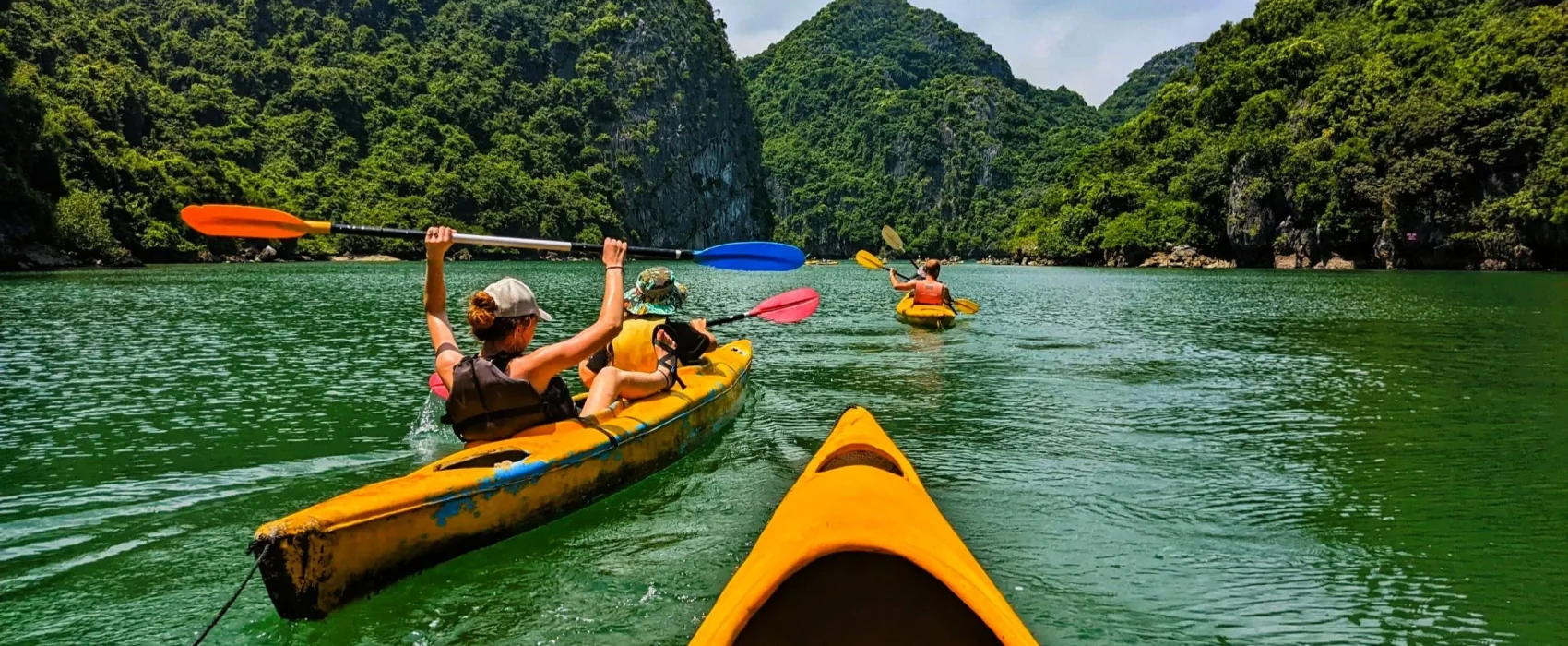
Paddle Into Vietnam’s Hidden Marine World
There is no better way to experience the raw, unfiltered beauty of Lan Ha Bay than from the seat of a kayak. While large cruise boats navigate the main channels, kayakers slip through narrow limestone archways, glide into hidden lagoons, and glide silently beneath ancient cave ceilings. Among the most iconic kayaking destinations in the region are Luon Cave, Bright Cave (Hang Sang), and Dark Cave (Hang Toi)—three geological marvels that showcase the bay’s dynamic tides, rich biodiversity, and timeless karst formations.
This comprehensive guide is designed specifically for tourists planning a kayaking excursion in Lan Ha Bay. Whether you’re a first-time paddler or an experienced adventurer, you’ll discover exactly what to expect at each cave, how tides shape your route, what gear to pack, how to choose a responsible operator, and how to paddle safely while protecting this fragile ecosystem.
Why Kayaking Is the Premier Way to Explore Lan Ha Bay
Unrestricted Access to Hidden Corners
Large vessels are restricted to deep channels and designated anchorages. Kayaks, however, can navigate shallow lagoons, tidal pools, and cave entrances that larger boats simply cannot reach. This opens up intimate perspectives of the bay’s limestone pillars, mangrove forests, and secluded beaches.
Silence That Reveals Nature
Without engine noise, you’ll hear what’s usually drowned out: birds calling from cliff ledges, water lapping against rock, distant fishermen singing, and the rustle of monkeys moving through island canopies. Kayaking transforms sightseeing into sensory immersion.
Eco-Friendly & Low-Impact
Human-powered travel leaves zero carbon emissions, no wake erosion, and minimal disturbance to marine life. When done responsibly, kayaking aligns perfectly with Lan Ha Bay’s growing sustainable tourism initiatives.
Flexible Pacing & Photography Opportunities
Guides allow time to stop, drift, and capture photos without rushing. The calm waters of sheltered caves and lagoons provide perfect conditions for long-exposure photography, drone-free landscape shots, and wildlife observation.
The Three Iconic Caves: A Complete Kayaking Breakdown
🌿 1. Luon Cave (Hang Luon) – The Emerald Archway
Location & Geography:
Though technically situated near the traditional Ha Long Bay boundary, Luon Cave is routinely included in Lan Ha Bay kayaking itineraries due to interconnected waterways and shared tidal systems. The cave features a low, wide limestone archway that opens into a sheltered, circular lagoon surrounded by vertical cliffs and mangrove roots.
The Kayaking Experience:
Paddling through Luon Cave requires you to lean slightly back as you pass under a ceiling just 2–3 meters above water level at high tide. Inside, the lagoon is remarkably calm, often reflecting the surrounding karsts like a mirror. Mangrove branches dip into the water, creating natural tunnels for exploration. Monkeys are frequently spotted climbing the rock faces above.
Tide Dependency:
Highly dependent on mid-to-high tide. At low tide, the entrance becomes too shallow or completely exposed. Operators carefully time visits to ensure safe passage.
Difficulty Level:
Beginner-friendly. The passage is short (under 100 meters), currents are gentle, and guides provide clear instructions before entry.
Best Time to Visit:
Early morning (6:30–8:30 AM) or late afternoon (4:00–5:30 PM) for optimal light and calmer winds.
☀️ 2. Bright Cave (Hang Sang) – A Sunlit Grotto
Location & Geography:
Located within the Lan Ha Bay archipelago, Bright Cave lives up to its name. Unlike fully enclosed caverns, Hang Sang features a partially open roof and wide mouth that allows natural sunlight to flood the interior. The walls display fossilized marine organisms, ripple marks from ancient seabeds, and mineral streaks that tell a 500-million-year geological story.
The Kayaking Experience:
The water inside is shallow, crystal-clear, and exceptionally calm. You’ll paddle slowly through a spacious chamber where light dances on limestone surfaces. The cave floor reveals tidal pools and small rock formations that change with each tide cycle. It’s an ideal spot for underwater photography, quiet reflection, and wildlife spotting (kingfishers and fruit bats are common).
Tide Dependency:
Moderate. Accessible at most tide levels, but water depth and cave floor exposure vary. Mid-tide offers the best balance of paddling depth and visible geological features.
Difficulty Level:
Easy to moderate. Wide passages and excellent visibility make navigation straightforward. Suitable for families and cautious paddlers.
Best Time to Visit:
Mid-morning (9:00–11:00 AM) when sunlight angles directly into the cave, creating dramatic lighting for photography.
🌑 3. Dark Cave (Hang Toi) – The Mysterious Passage
Location & Geography:
Dark Cave is one of Lan Ha Bay’s most thrilling kayaking destinations. True to its name, the interior receives minimal natural light due to narrow, winding passages and a partially collapsed ceiling. The cave’s limestone walls are textured with dramatic erosional patterns, and the water flows through a series of interconnected chambers that shift with tidal movement.
The Kayaking Experience:
Entering Hang Toi feels like stepping into another world. Guides typically distribute waterproof flashlights or headlamps before departure. You’ll navigate through low archways, squeeze past rock pillars, and glide through silent, echo-filled chambers. The atmosphere is atmospheric, slightly cool, and deeply immersive. At low tide, you can step onto exposed sandbars inside the cave to explore on foot (with guide supervision).
Tide Dependency:
Critical. Safe kayaking requires mid-to-low tide. High tide can make passages too tight or submerge navigable routes. Operators monitor tidal charts closely and adjust itineraries accordingly.
Difficulty Level:
Moderate. Requires basic paddling skills, comfort with confined spaces, and attention to guide instructions. Not recommended for those with severe claustrophobia.
Best Time to Visit:
Late morning to early afternoon (10:30 AM–2:00 PM) when tidal windows align and natural light, though limited, still filters through upper cracks.
How Tides & Weather Shape Your Kayaking Route
Lan Ha Bay experiences a semi-diurnal tidal pattern (two high tides and two low tides daily), with a range of 2.5–4 meters depending on lunar cycles. This directly impacts cave accessibility:
| Cave | Ideal Tide | Risk if Ignored |
|---|---|---|
| Luon Cave | Mid to High | Shallow entrance, boat scraping, restricted access |
| Bright Cave | Mid | Reduced water depth, exposed cave floor limits paddling |
| Dark Cave | Mid to Low | High water narrows passages, increases collision risk |
Weather Considerations:
- Calm seas & light winds: Optimal for all three caves
- Afternoon thunderstorms (summer): Can create sudden chop; guides may postpone cave visits
- Winter fog: Reduces visibility but adds atmospheric beauty; routes remain navigable with experienced guides
- Typhoon season (Aug–Oct): Operators monitor closely; itineraries are adjusted or rescheduled for safety
Pro Tip: Reputable guides carry tide tables and adjust daily routes accordingly. Always ask your operator how they plan cave visits around tidal windows.
What to Expect on a Guided Kayaking Tour
Typical Itinerary Flow
- Safety Briefing (15–20 mins): Life jacket fitting, paddling technique, hand signals, emergency procedures
- Launch & Warm-Up (10 mins): Practice in calm, open water before approaching caves
- Cave Circuit (60–90 mins): Guided paddling through 2–3 caves, with stops for photography, swimming, or shore exploration
- Return & Debrief (15 mins): Safe docking, gear collection, optional refreshments
Equipment Provided
- Sit-on-top kayaks (stable, self-draining, beginner-friendly)
- PFDs (Personal Flotation Devices) – mandatory for all ages
- Double-bladed paddles (adjustable length)
- Waterproof bags for personal items
- Flashlights/headlamps (for Dark Cave)
- Guide communication whistles & first aid kits
Guide Roles & Expertise
Licensed guides in Lan Ha Bay are trained in:
- Local navigation & tidal patterns
- Marine ecology & geological history
- Water rescue & emergency response
- Eco-tourism best practices & wildlife protection
- Multi-language communication (English, French, Spanish, etc.)
Essential Packing & Preparation List
Clothing & Gear
- Quick-dry, breathable clothing (avoid cotton)
- Swimwear underneath for spontaneous dips
- Water shoes or secure sandals (flip-flops easily lost)
- Wide-brim hat & UV-blocking sunglasses
- Light windbreaker or rash guard for sun/wind protection
Protection & Electronics
- Reef-safe, water-resistant sunscreen (SPF 50+)
- Lip balm with SPF
- Dry bag (5–10L) for phone, camera, wallet
- Waterproof phone case or action camera
- Portable power bank (cabin charging limited)
Optional but Recommended
- Polarized sunglasses (reduces water glare, improves visibility)
- Lightweight towel (quick-dry microfiber)
- Motion sickness tablets (if prone to seasickness before launch)
- Reusable water bottle (most operators provide refill stations)
What NOT to Bring: Heavy bags, non-waterproof electronics, valuables, single-use plastics, glass containers.
Safety First: Navigating Lan Ha Bay’s Waters Responsibly
Core Safety Protocols
- Always wear your PFD: Even strong swimmers must keep life jackets fastened
- Stay within visual/verbal range of your guide: Guides monitor tides, weather, and boat traffic
- Follow hand signals & whistle codes: Essential for silent cave navigation
- Never paddle alone: Group kayaking ensures immediate assistance if needed
- Respect no-kayak zones: Some areas are restricted for marine protection or cruise traffic
Emergency Preparedness
- Guides carry VHF radios and coordinate with main cruise vessels
- Rescue kayaks or support boats follow larger groups
- First aid kits and emergency evacuation protocols are standard
- Weather changes trigger immediate route adjustments
Insurance Note: Verify that your travel insurance covers water sports and guided excursions. Most standard policies do, but confirm beforehand.
Choosing the Right Cruise or Kayaking Operator
Not all operators prioritize safety, expertise, or sustainability. Use this checklist to select a reputable provider:
✅ Licensed & Certified: Guides hold official tourism and water safety credentials
✅ Small Group Sizes: Maximum 6–8 kayaks per guide ensures personalized attention
✅ Transparent Itineraries: Clear cave routes, tidal planning, and activity durations
✅ Eco-Compliant Practices: Plastic-free operations, reef-safe policies, waste management
✅ Positive Recent Reviews: Look for mentions of guide expertise, safety, and environmental respect
✅ Flexible Weather Policy: Willing to adjust or reschedule for safety without penalty
Questions to Ask Before Booking:
- How many kayaks does one guide supervise?
- Do you adjust cave visits based on daily tidal charts?
- What safety equipment is onboard and on each kayak?
- Are flashlights provided for Dark Cave, or should I bring my own?
- How do you handle sudden weather changes or rough water?
Eco-Kayaking: Protecting Lan Ha Bay’s Fragile Ecosystem
Your paddling choices directly impact the bay’s health. Follow these responsible practices:
🌿 Leave No Trace: Pack out all trash, including biodegradable items like fruit peels
🐚 Never Touch or Remove: Coral fragments, shells, rocks, or cave formations
🐒 Maintain Distance: Do not feed, approach, or photograph wildlife at close range
🌊 Use Reef-Safe Sunscreen: Oxybenzone and octinoxate harm marine larvae and coral
🚣 Follow Marked Routes: Avoid shallow seagrass beds and mangrove root zones
💡 Minimize Noise: Speak softly in caves to preserve acoustic ecology and wildlife calm
🤝 Support Local Guides: Choose operators employing Hai Phong and Cat Ba residents
By paddling mindfully, you become part of the solution rather than the pressure on this UNESCO-recognized landscape.
Frequently Asked Questions: Kayaking in Lan Ha Bay
Q: Can beginners safely kayak in Lan Ha Bay?
A: Yes. Sit-on-top kayaks are highly stable, and guides provide thorough instruction before launch. Most routes are designed for first-time paddlers.
Q: How long does a typical kayaking excursion last?
A: 1.5 to 2.5 hours on water, including briefing, cave navigation, photo stops, and return. Total activity time is usually 3 hours with transit.
Q: What if it rains during my kayak tour?
A: Light rain rarely cancels tours and can enhance the mystical atmosphere. Guides provide ponchos if needed. Heavy storms or strong winds trigger postponement or route changes for safety.
Q: Are children allowed to kayak?
A: Most operators accept children aged 6+ with life jackets. Some offer double kayaks for parents with younger kids (4–5). Always confirm age policies when booking.
Q: Do I need to bring my own kayak or gear?
A: No. All reputable cruises provide kayaks, PFDs, paddles, dry bags, and cave lighting. Just pack personal essentials in waterproof storage.
Q: Can I kayak independently without a guide?
A: Independent kayaking is not permitted in Lan Ha Bay due to safety regulations, tidal complexity, and environmental protection rules. Guided tours ensure compliance and security.
Q: Is swimming allowed during kayaking tours?
A: Yes, in designated calm zones and beaches. Guides will specify safe swimming areas and monitor currents.
Q: How do tides affect cave accessibility?
A: Tides dictate water depth, passage width, and safety. Operators consult daily tidal charts and adjust cave sequences accordingly. You won’t miss experiences; they’ll be rescheduled or substituted safely.
Final Thoughts: Paddle with Purpose, Explore with Wonder
Kayaking through Luon Cave, Bright Cave, and Dark Cave isn’t just an activity—it’s a journey into the geological soul of Lan Ha Bay. Each stroke reveals a new perspective: sunlight fracturing through limestone, tidal rhythms shaping ancient passages, and the quiet resilience of an ecosystem that has endured for millennia.
By choosing responsible operators, respecting tidal patterns, and paddling with mindfulness, you transform a simple excursion into a meaningful connection with one of Vietnam’s most extraordinary natural landscapes. The bay doesn’t just welcome visitors; it rewards those who approach it with curiosity, care, and readiness to listen.
Ready to Paddle Into Lan Ha Bay’s Hidden World?
- Book a reputable cruise that includes guided kayaking in its itinerary
- Confirm tidal planning & safety protocols with your operator
- Pack light, waterproof, and reef-safe
- Arrive with flexibility and trust your guide’s expertise
- Leave only ripples, take only memories
The limestone arches await. The water is calm. Your paddle is ready. 🛶🌊✨
Comments